
Eye Exams | Call Now!
Make an appointment by calling or filling out this form
Special Offers Available
Mesa, AZ 85205 Eye Doctor
Your children's faces, your favorite flower, a dazzling sunrise -- these and so many other daily sights are easy to take for granted. But we can only enjoy these images when the eyes are fully able to convey the necessary information to the brain for processing.
This makes it imperative that you take the necessary steps to preserve that precious ability through regular professional eye care. Our experienced optometrist and highly trained staff are ready, willing, and able to provide that care to your and your loved ones for life. Call now to schedule your appointment!
Professional Eye Care
Preventative medicine is always the best kind of medicine. This is especially true for the eyes, since many of the conditions that cause vision loss are both progressive and non-reversible. These threats include:
- Cataracts - Clouding of the lens of the eye that causes blurred vision and poor contrast sensitivity
- Glaucoma - Excess pressure within the eye that can damage the optic nerve
- Macular degeneration - Progressive damage to the part of the eye that provides your central field of vision
- Diabetic retinopathy - Destruction of retinal blood vessels caused by an underlying case of diabetes.
Regular eye exams give our optometrist a chance to detect and treat eye conditions to slow or arrest the progress of serious disorders. At the same time, we evaluate your peripheral vision, eye teaming, focusing ability and other aspects of eye function, recommending treatments and therapies as needed to help you overcome them. We can also diagnose and treat problems such as dry eye syndrome, eye infections and eye trauma.
Our Services
- Comprehensive Eye Exams
- Prescription Eyeglasses
- Contact Lens Exams
- Designer Frames
- Order Contact Lenses
- Primary Eye Care
- Rx Sunglasses
- Eye Injuries
- Vision Testing
- Eye Infections
- Eye Conditions
- And More!



Comprehensive Eye Exams
Our eye doctor employs a wide range of state-of-the-art equipment to make the most accurate diagnoses possible. For instance, a technique called tonometry allows us to check your eye's internal pressure, while a device called a retinoscope lets us look inside the eye to examine the retina. to get the clearest look at the retina, we recommend dilation of the pupil, a simple process involving the addition of eye drops that make the pupil relax and open up.
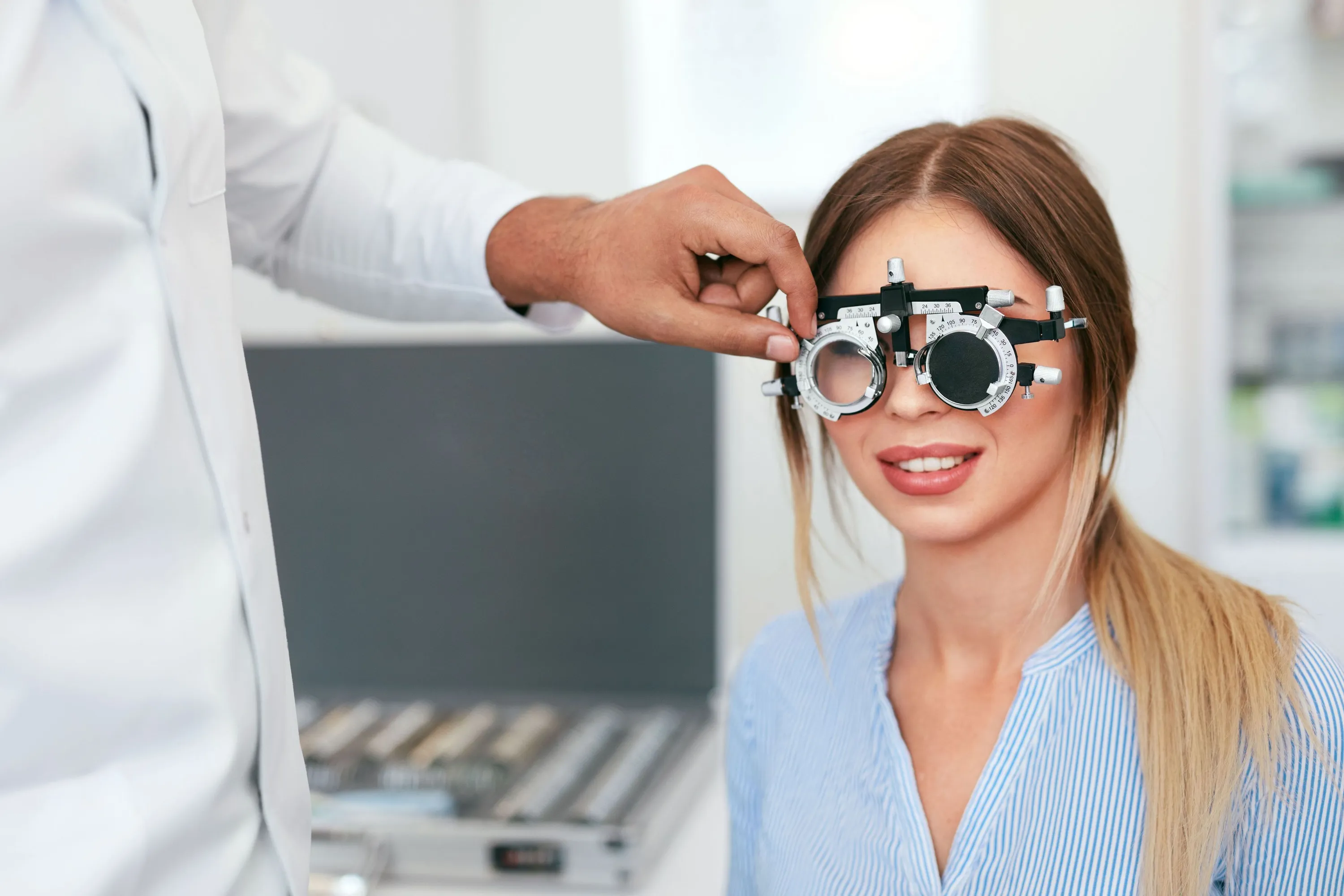
Visual acuity testing is another important type of eye care. Our eye doctor performs these tests at the same time as the rest of your eye exam. By judging your ability to read different sizes of text through a machine called a phoropter, we can determine what kind of degree of refractive disorder might be interfering with your eyesight. Nearsightedness, farsightedness and astigmatism are three common forms of refractive disorder, all of which can be treated with corrective lenses. If you're approaching middle age, you may also develop a refractive problem called presbyopia. We can prescribe bifocal, trifocal or multifocal lenses to correct this issue as well.
Prime Eye Care Mesa, AZ 85205
6343 E Main St Ste B7
Mesa, AZ 85205
Prime Eye Care Mesa, AZ 85205
Monday
7:30 am - 5:00 pm
Tuesday
7:30 am - 5:00 pm
Wednesday
7:30 am - 5:00 pm
Thursday
7:30 am - 5:00 pm
Friday
7:30 am - 5:00 pm
Saturday
Closed
Sunday
Closed